
DevDeer TechLoading
Agency
 Kaies Mahmud Nehal3 min read
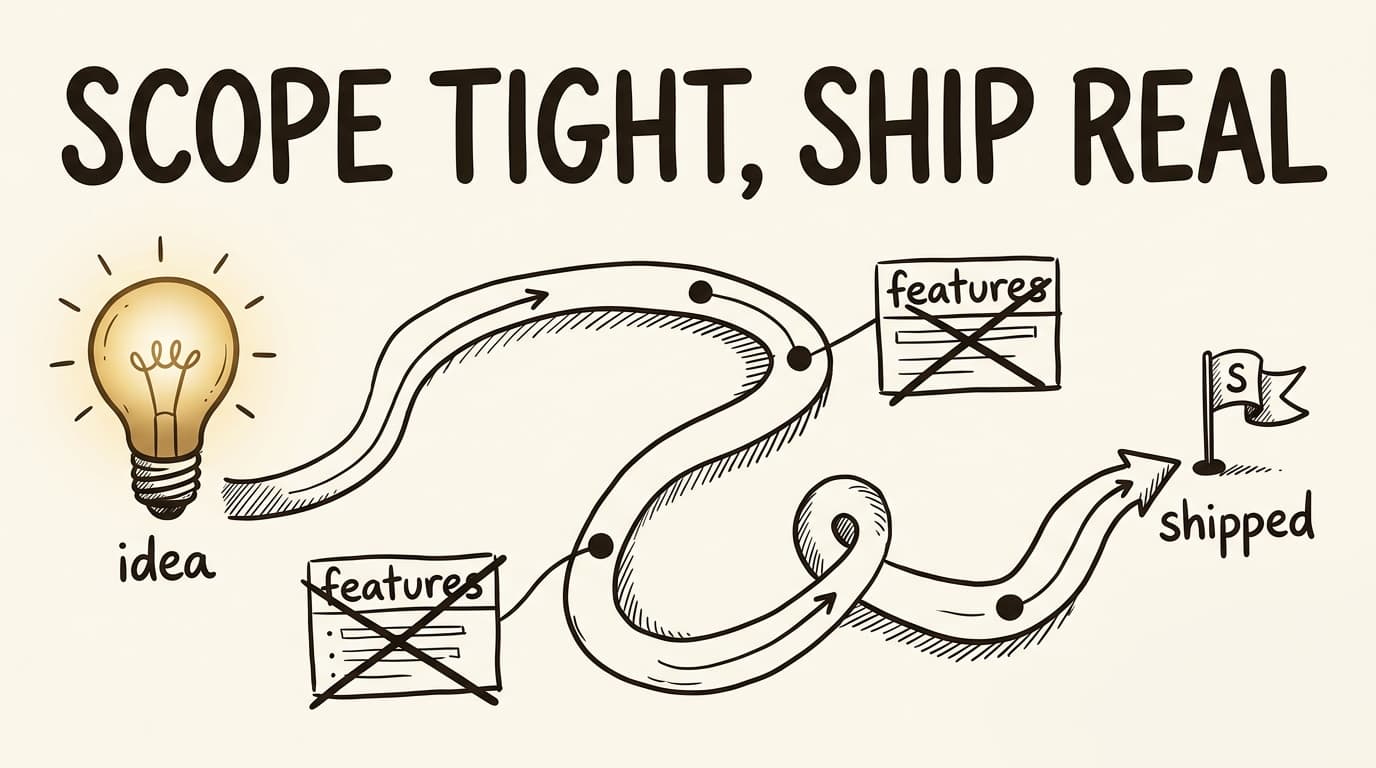
Across SaaS, agency, healthcare, e-commerce, and gaming, car auctions, Devdeer Tech has shipped more than twenty products. Looking back, the difference between a smooth build and a painful one was rarely the tech stack. It was almost always the scope. Here is what we learned, stated plainly.
When a project goes well, people credit the stack. When it goes badly, they blame the stack. In our experience, the framework, the database, and the hosting were almost never the root cause. The root cause was that nobody agreed, in concrete terms, on what was being built.
A clear scope gives everyone the same picture of "done". It makes estimates honest, makes testing possible, and makes disagreements short, because there is something written down to points at.
A bad scope shows up late. It arrives as rework, blown deadlines, surprise invoices, and a client who feels the product is "not quite what I meant". By then, fixing it is expensive.
That sentence tells us the client's ambition. It does not tell us who the users are, what they do first, what happens when payment fails, or what the admin needs to see. Every one of those gaps becomes a guess, and every guess is a chance to build the wrong thing.
Before writing code, we push for concrete, testable answers.
Who are the users, and what is the single most important thing each of them does?
What does "done" look like for the first release?
What must work on day one, and what can wait?
How will we test that each requirement is actually met?
Every hour spent turning a feeling into a requirement saves about ten hours of building the wrong thing. It can feel slow up front. Clients thank us for it later.
A feature that works when we present it is not the same as a feature that survives real users. Real users do things demos never do.
Empty states, where there is no data yet
Bad input, such as wrong formats and unexpected characters
Timezone shifts and daylight saving changes
Someone double clicking the save button
Slow networks and interrupted sessions
The last twenty percent of robustness is eighty percent of the trust. Users rarely notice when edge cases are handled. They always notice when they are not.
The common move is to keep the full feature list and lower the quality to fit. That produces a product where everything half works.
We would rather ship fewer features that genuinely work than a full list that does not. A smaller product that feels solid beats a bigger one that feels shaky.
Cut what the first users can live without.
Keep anything tied to money, security, or personal data.
Move the rest to a clearly labeled second release.
Sometimes an idea will not pay for itself. The kindest thing we can do for a client is say so before they spend on it.
A frank conversation at the start is worth more than a large invoice for something that did not need to exist. Devdeer Tech would rather lose a project than build something we do not believe in.

Write down who the users are and what each one does first.
List features as "must have", "should have", and "later".
Define "done" for each must-have in a way you can test.
Name the edge cases you already know about.
Agree on what will be cut first if time runs short.
None of this is glamorous. All of it is why our clients come back.
Most painful projects fail because the requirements were unclear, not because of the framework or database. A clear scope makes estimates, testing, and expectations reliable.
We ask who the users are, what each one does first, what "done" looks like, and how each requirement will be tested. Turning the idea into written, testable statements comes before any code.
A demo shows the happy path. A finished product also handles empty states, bad input, timezone shifts, slow networks, and users who click twice. That extra robustness is where user trust comes from.
Cut features, not quality. Ship fewer features that fully work, keep anything tied to money, security, or personal data, and move the rest to a second release.
Yes. Every hour spent on concrete requirements saves many hours of rework, and it prevents the surprise costs that come from building the wrong thing.
Yes. We would rather have a short honest conversation up front than invoice you for something that did not need to exist.
Yes. Devdeer Tech helps clients turn ideas into clear, testable scopes before any build begins. Get in touch to talk through your project.